


On Monday, twelve state attorneys general filed motions for a temporary restraining order (TRO) and a preliminary injunction to stop the merger of Warner Bros. and Paramount from going ahead until the courts can evaluate a request to block the merger, filed in the Northern District of California.
You can find the complaint in the case here.
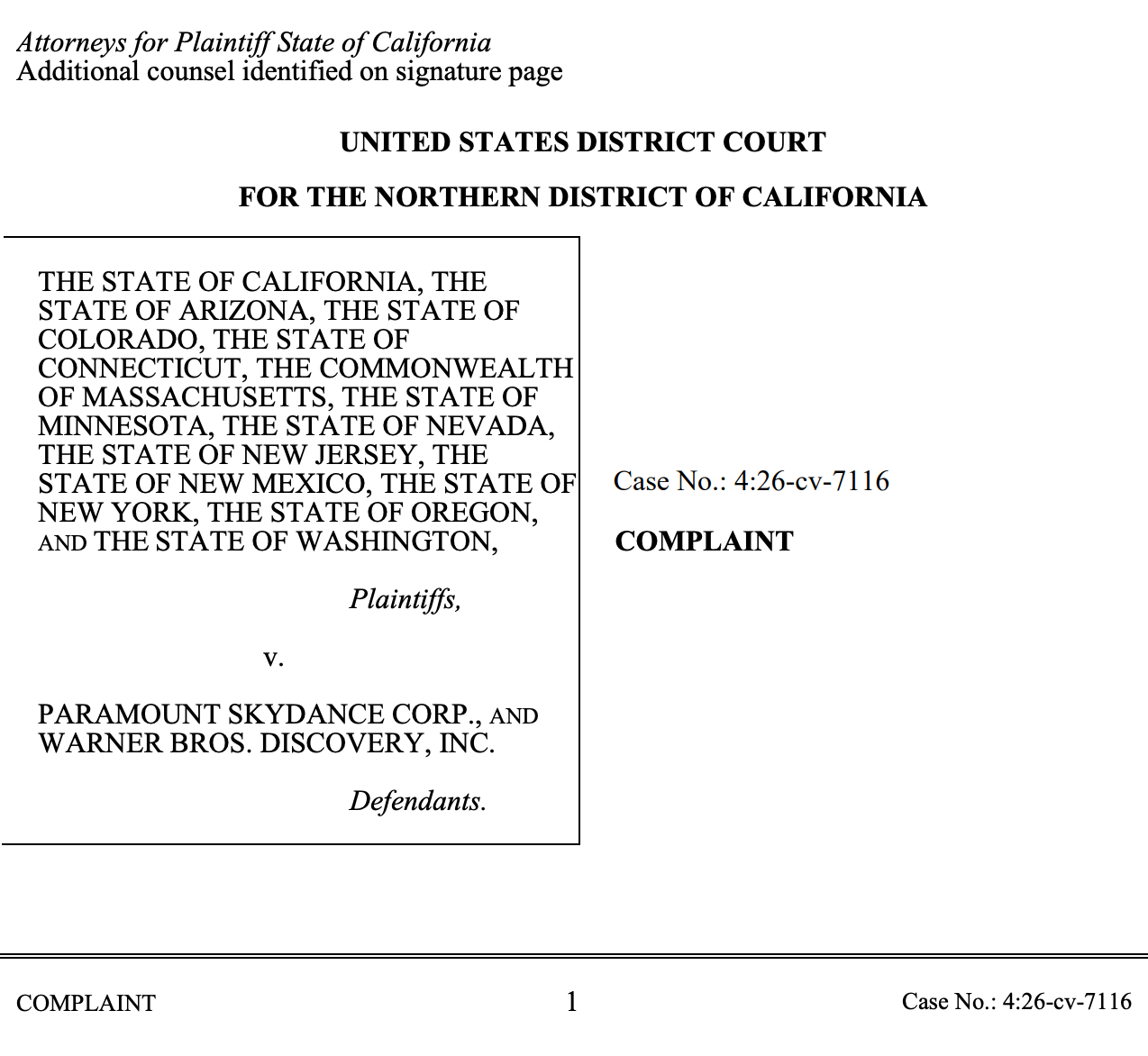
The proposed $110 billion merger between Paramount Skydance and Warner Bros. would be the largest in Hollywood history. The plaintiffs allege that it “would extinguish competition between Paramount and Warner Bros. and inflict substantial harm on movie theatres, basic cable distributors, and, ultimately, audiences nationwide.”
California’s Attorney General Rob Bonta calls his case “clean and clear” and is quick to explain that while, historically, DOJ has protected Americans from the impact of monopolies, state attorneys general have the legal authority to do so, too. And in an era where DOJ has abdicated its responsibility, the AGs have a moral obligation to step in and protect consumers.
Antitrust cases are complicated. This one, like most, raises Section 7 claims under the Clayton Act. That’s the primary federal antitrust law that prohibits mergers, acquisitions, and joint ventures where the effect “may be substantially to lessen competition, or to tend to create a monopoly.”
AG Bonta joined me tonight to discuss both substance and procedure as the case moves forward, as well as the stakes. “The unlawful merger of Warner Bros. and Paramount would harm movie theaters, basic cable distributors, and ultimately, audiences on every sofa and movie theater seat in the U.S.,” he said when he announced the litigation. “These titans of industry must not move to merge until a court properly evaluates our claims.”
If you missed us live, click above to get up to speed so you can follow this case as Bonta’s request for injunctions (we discuss what the two different kinds are and why he asked for both in our conversation) moves forward. Lots more to come on this one.
If you enjoy conversations that go beyond the day's headlines and get into the legal strategy, the practical realities, and the people behind the cases, this conversation is for you. This is a unique conversation; it brings you the kind of information you can’t find anywhere else: two prosecutors talking about what the case is really about. Paid subscribers make conversations like this possible, and I'm grateful to everyone who helps bring them to our community of informed, engaged people who care about the future of democracy, here at Civil Discourse.
We’re in this together,
Joyce


