

Yesterday morning, the Eleventh Circuit Court of Appeals breathed new life into a case that, after some early movement, seemed to be on the proverbial slow boat. It’s the case involving whether Volume II of Jack Smith’s final report on the classified documents investigation should be released. You may recall that it’s complicated. The judge in that case, Aileen Cannon, has repeatedly acted to ensure that, unlike virtually every other special counsel report, this one doesn’t come to light.
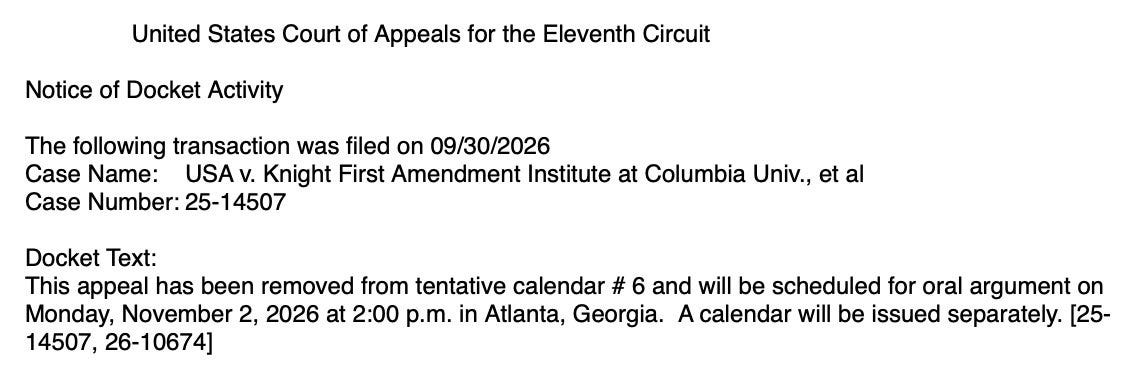
Now the Court has moved up the date for oral argument to November 2. It had been languishing with a likely argument date after the first of the year, even though the briefing in the case is complete. This is not particularly unusual in the circuit, though. What is unusual is the sudden movement, and interestingly enough, to the day before Election Day.
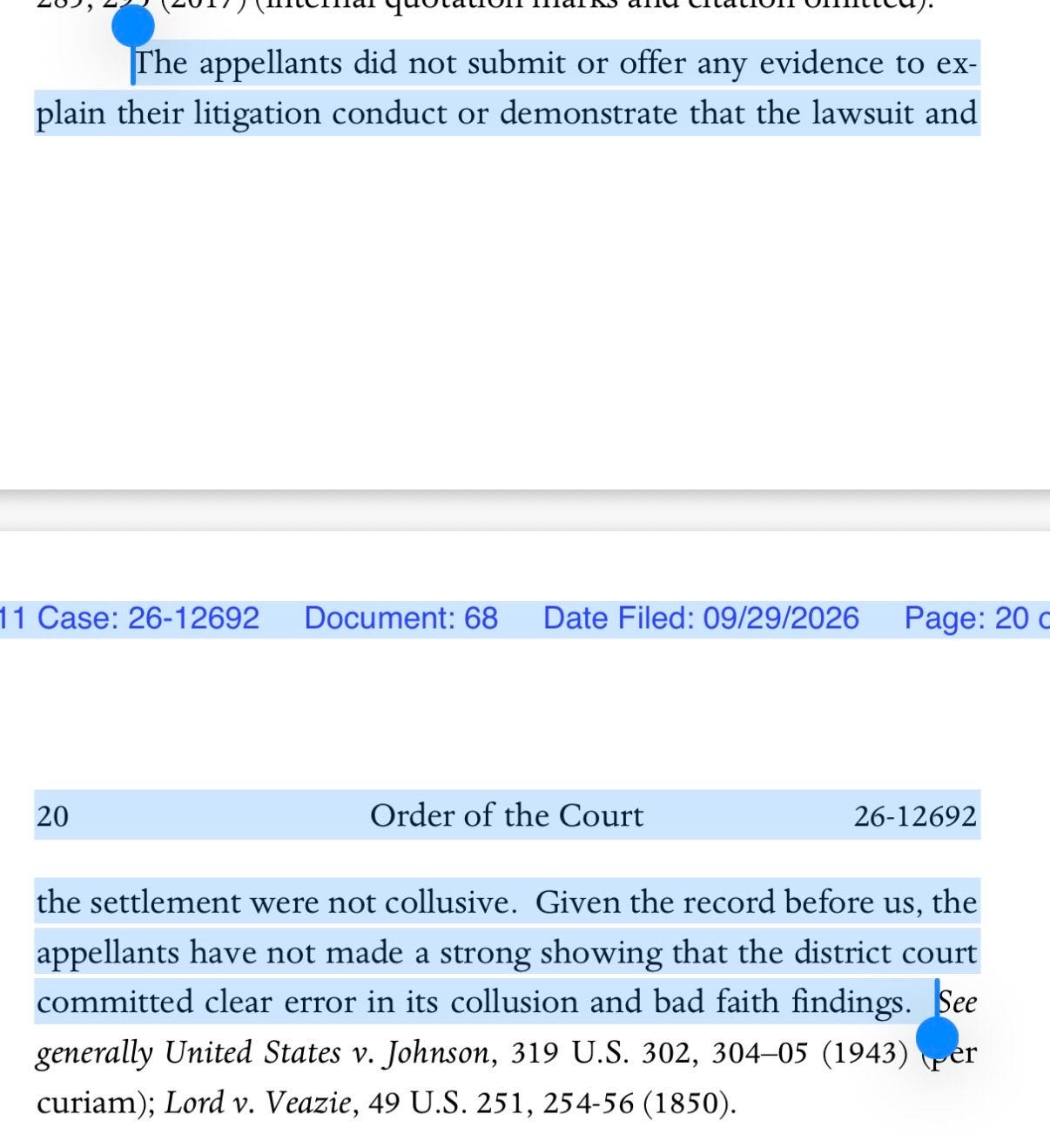
This comes just a few days after another Eleventh Circuit panel kept in place the sanctions imposed by Judge Williams in what we’ve come to know as the slush fund case, Trump v. IRS, while the case is on appeal. That’s the case where Trump publicly acknowledged he was, in essence, both the plaintiff and the defendant, controlling the decision about the settlement the government would award him. Trump wanted the sanctions stayed while he appealed her decision. That decision came after a group of retired judges moved to intervene and reopen the case, arguing that the purported settlement was a fraud on the court. The settlement would have created a slush fund that could benefit his January 6 supporters and included protection from tax audits and investigations related to past filings.
The three-judge panel sided with Judge Williams, noting, in some strong language, that the Trump plaintiffs utterly failed to so much as respond to the claims the lawsuit was collusive. They concluded there was no evidence that Judge Williams clearly erred when she found collusion and bad faith. That’s a bench slap against the sitting president.
September wasn’t a good month in court for Trump for many reasons, and the Eleventh Circuit has added to them.
Like Trump v. IRS, the lawsuit over Volume II of Jack Smith’s report also required intervention in order to have two adverse parties involved in the case. That’s because the Trump administration isn’t exactly arguing in favor of releasing the report and, in fact, is doing everything it can to support Judge Cannon’s predilection for suppressing it.
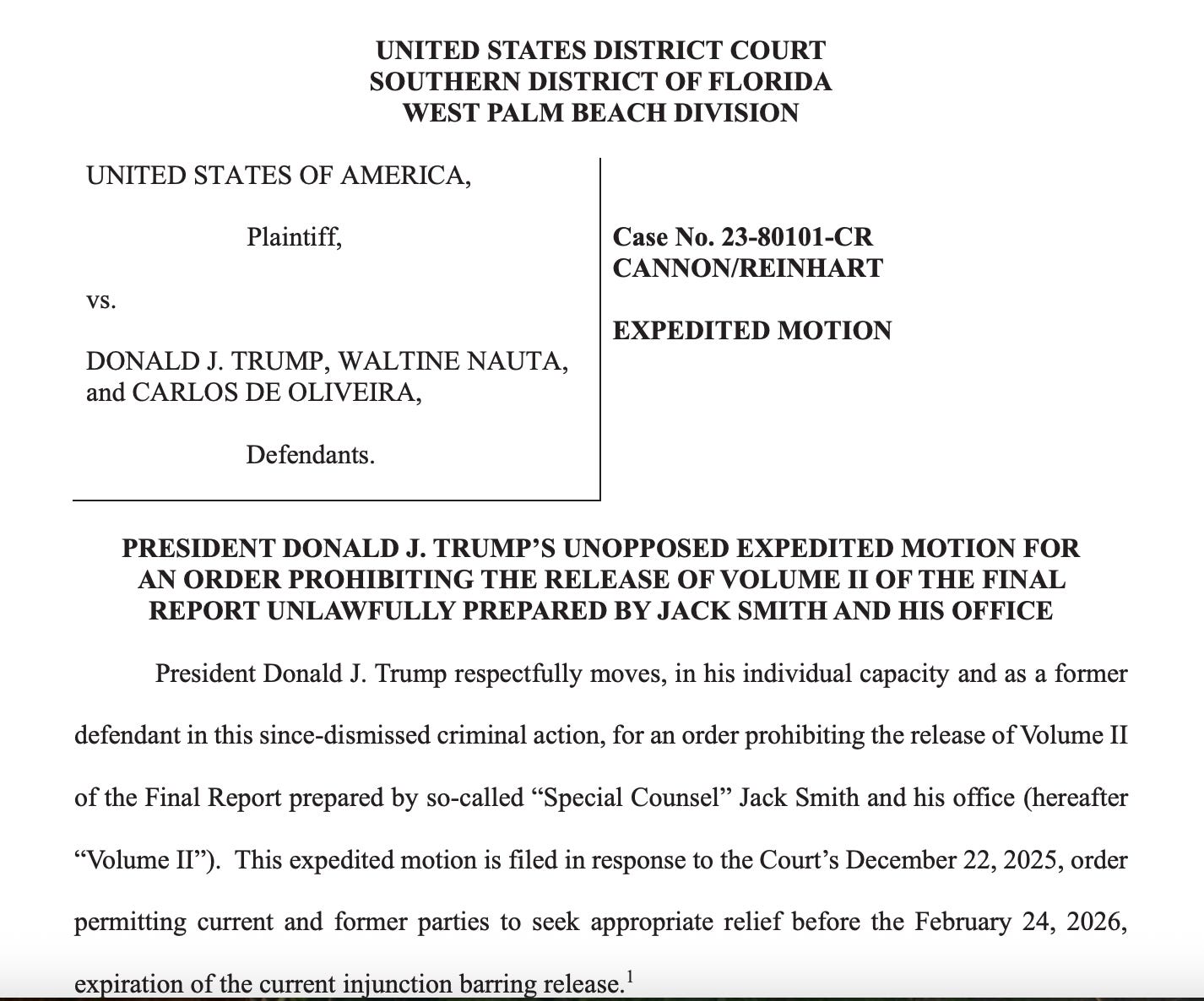
We’ve been discussing this situation all along, but it’s been off the front burner since May, so you can be forgiven if you need a refresher. As I wrote at the time, “There is a fascinating resonance between Cannon’s decision to prevent the release of Volume II and the issue we’ve seen surface in Trump v. IRS, the case whose ‘settlement’ led to the creation of the slush fund Trump can use to give taxpayer dollars to January 6 defendants while erasing his and his family’s liability for debts owed to the government, like back taxes from tax audits. The common thread is cases where, instead of a legitimate adversarial process, with opponents duking it out in court, Trump is the actual party in interest on ‘both sides of the v.’”
Judge Cannon issued the order blocking release of Volume II back on inauguration day in 2025. In February, in a piece appropriately titled, “If DOJ is Trump’s Law Firm, Aileen Cannon is his Judge,” we discussed Cannon’s decision to suppress the report in what she characterized as two “unopposed” motions—one brought by Trump and one by his co-defendants in the Mar-a-Lago case—designed to prevent release of Volume II. As a result, two groups of journalists, American Oversight and the Knight First Amendment Institute, asked to intervene in the case to ensure an adversarial proceeding. Cannon responded by refusing to rule. After months passed, the Eleventh Circuit responded to a request from the would-be intervenors, ordering her to rule. She did so, waiting for the deadline the court gave her, predictably telling American Oversight and Knight no.
That’s the issue the court will hear oral argument on next month: whether there can be a true adversarial process, and perhaps a different judge, to determine whether the report should be released. The panel does have the ability to order Judge Cannon to recuse.
We’ll see what the Eleventh Circuit has to say on November 2.
I hope posts like this are what you come to Civil Discourse for, because they’re important ones, tracking the most significant cases over the long haul. No one will ever accuse the courts of moving quickly, but when cases like this come to a head, the outcome can have a profound effect on our fragile democracy. We’re headed into one of those moments here, and it’s your support for and paid subscriptions to the newsletter that make this kind of independent reporting possible. If that’s something you value, I hope you’ll subscribe if you don’t already.
We’re in this together,
Joyce
I hope cannon is recused and later impeached. She is the worst kind of judge out there; a partisan hack hell bent on saving her boy, trump (also known as POS).
Cannon needs to be debenched.